Why Workforce Training Matters in 2026 for Supporting Stress
Stress is now a defining factor in how employees engage with wellbeing programmes. Stress Awareness Month offers a timely reminder that effective support depends less on good intentions and more on having people trained to deliver wellbeing in real‑world conditions.
Written by
Daniella Sallows
In today’s fitness environments, stress is something many members bring with them into the gym, studio, or session. Throughout April, Stress Awareness Monthputs a renewed spotlight on how common this is, and how it continues to be under-addressed within fitness and wellbeing spaces.
The challenge is not a lack of goodwill or effort. Most programmes fail at the point of delivery, where well‑intentioned sessions are delivered without the behavioural skills required to engage people whose cognitive and emotional capacity is already under strain.
Stress awareness month and the realities of delivery
For fitness professionals, wellbeing leads, and gym teams, April can highlight just how many members are showing up experiencing stress and how challenging it can be to support them effectively.
Stress carried into sessions, whether from work or life, can significantly impact the individual in front of you. It influences motivation, shapes body language, and affects how someone shows up. Psychological research shows that under stress, individuals rely more heavily on habitual behaviour and struggle with new decision‑making or sustained effort. Recognising that shift, and knowing how to respond in a session, is what separates skilled coaching from delivery that unintentionally pushes members further away.
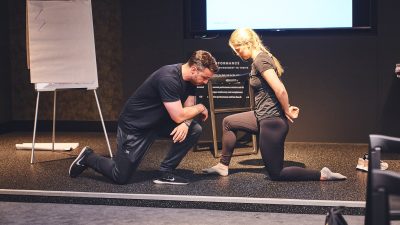
Health and wellbeing professional having a supportive conversation with a workplace client.
Why stress reveals a capability gap, not a motivation gap
It’s easy to assume low engagement in sessions or programmes comes down to disinterest. But in reality, when members are highly stressed, disengagement often reflects a mismatch between what they’re experiencing and what the session is asking of them.
A stressed member isn’t simply distracted, their capacity for change is genuinely reduced. Without that understanding, wellbeing programmes risk reinforcing the very barriers they’re designed to remove; low uptake, high dropout, and growing scepticism about whether professional wellbeing delivery is worth the investment.
The evidence that physical activity supports stress management is well established. But physical activity and wellbeing are not the same thing, and the gap between them is filled by the quality of delivery. Stress-aware coaching means adjusting intensity when a member is already overstimulated, offering choice rather than rigid instruction, and framing effort in a way that supports, rather than adds to, an already full mental load. For practitioners across any setting, this skill set is increasingly non-negotiable.
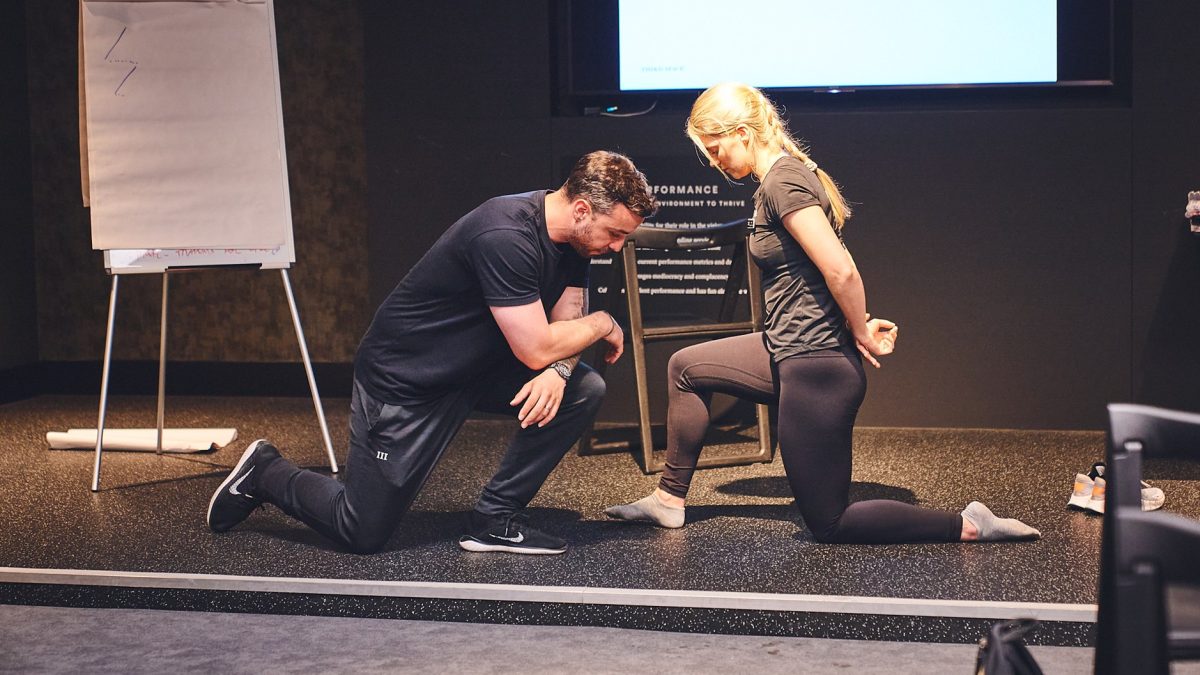
Workplace wellbeing session
The skills your team need during stressful times
Understanding why people resist change, especially under stress, equips practitioners to meet them where they are and use language that creates momentum rather than pressure.
Three capability areas make the biggest difference when supporting stressed members in real-world sessions:
Behaviour Change CPD: Raising sensitive topics without overstepping requires specific training. Healthy conversations at work rely on clear professional boundaries and the confidence to hold space without overreaching.
Healthy Conversations CPD: For clients who are already stressed, showing up takes courage. Building trust in wellbeing programmes starts with practitioners skilled in supporting people who are uncertain or disengaged.
Health Seeker Coaching: The organisations that support their members best are those that invest in the right capabilities. The most valuable question isn’t “are we doing enough?” It’s “are the people doing it trained well enough to do it right?”