A landmark joint statement from six global health organisations has placed qualified exercise support at the heart of the obesity medication debate. The science has been building for some time. What is shifting now is the institutional will to act on it.
On the 31st March 2026, ukactive joined the World Obesity Federation and four other international bodies in calling on governments and health systems to ensure GLP-1 therapies are embedded within integrated care models; rather than being prescribed in isolation. It calls, instead, for a wraparound model in which physical activity and nutrition are treated as clinical essentials rather than lifestyle supplements.
This reflects a well-established body of evidence. Evidence increasingly indicates that without structured resistance exercise, 25-40% of weight lost on GLP-1 medications derive from lean muscle rather than fat. The consequences include reduced metabolic rate, increased risk of weight regain and diminished functional capacity, all of which carry significant implications for long-term health outcomes.
WHO Guidelines: December 2025
WHO physical activity guidelines recommend a minimum of 150-300 minutes of moderate aerobic activity and two or more sessions of muscle-strengthening activity per week – targets that remain relevant and important for individuals receiving pharmacological obesity treatment.
A note on appropriate clinical use
In the UK, GLP-1 medications are currently approved for adults with a BMI of over 30, or over 27 for those living with weight-related conditions. Growing their direct-to-consumer availability has raised legitimate questions about their use outside a formal diagnosis and without adequate clinical oversight. Exercise professionals are well placed to consider whether that oversight is in place for their clients, and signpost to appropriate clinical support where it appears to be absent.
The role of the exercise professional
Across the treatment journey – during active medication use, through the behaviour change phase, and into post-medication maintenance – the exercise professional’s contribution is distinct and evidence based. During treatment, the priority is preserving lean mass through progressive resistance training, adapted to the reduced energy that appetite suppression creates. Beyond the medication window, the focus shifts to building the discipline and sustainable habits that determine long-term health outcomes, the phase where, as STEP and SURMOUNT trial data indicates, lifestyle choices become the primary determinant of whether weight loss is maintained.
“Physical activity and nutrition are not optional add-ons; they are foundational to safety, effectiveness, and long-term success.”
– Liz Clark, President and CEO, Health & Fitness Association
This joint statement and the WHO guidelines both use the language of “qualified exercise professionals” deliberately. Supporting clients on GLP-1 medications draws upon multiple areas; clinical awareness, specialist programming and behaviour change, all of which sit within advanced exercise qualifications rather than general fitness instruction. The credibility of the sector’s role in integrated care pathways will depend, in meaningful part, on the professional standards that underpin the workforce delivering them.
The Next Step
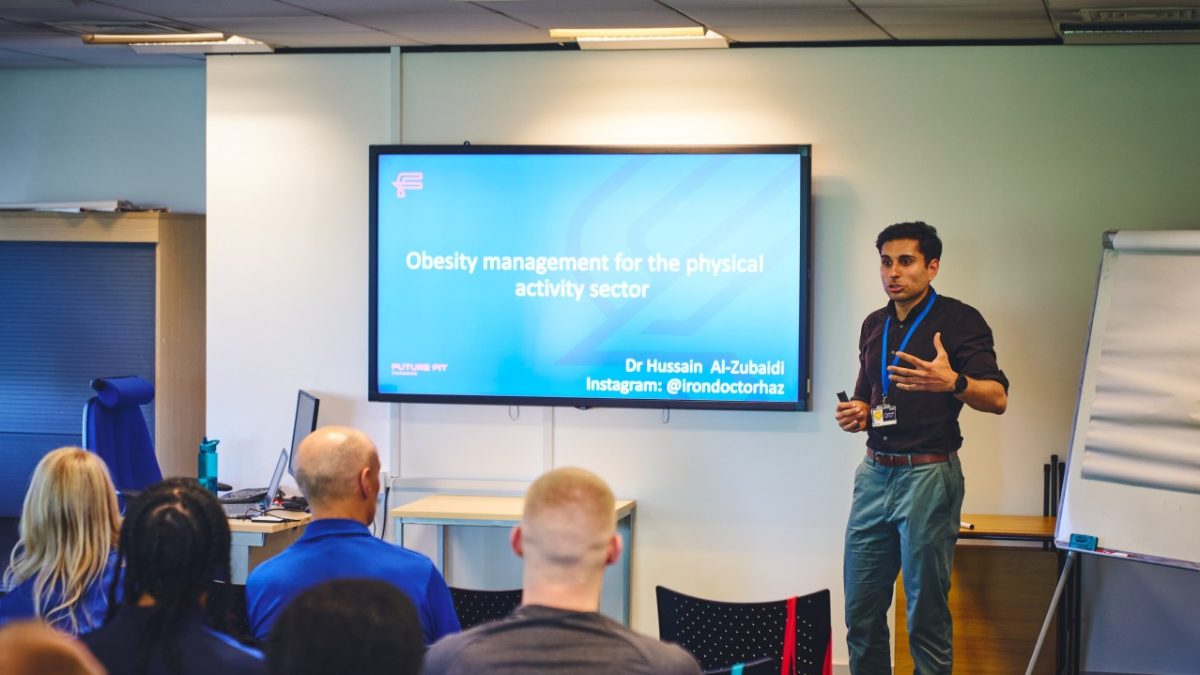
Developed in collaboration with Dr Hussain Al-Zubaidi and structured across three tiers – from foundational awareness through to specialist programming, our Navigating GLP-1 for Sport & Physical Activity Professionals course was built precisely for this intersection of fitness and healthcare. As the policy and clinical landscape continues to evolve around GLP-1 integration, the depth of knowledge and practical frameworks these qualifications provide is increasingly relevant to practitioners working at this intersection of fitness and healthcare.
For more information, click the link or speak to a member of our team.
Telephone
01329 756196
Email
[email protected]
This article draws on the joint position statement published by ukactive, the World Obesity Federation, the Health & Fitness Association, AUSactive, Exercise New Zealand, and the Fitness Industry Council of Canada (31 March 2026); WHO guidelines on physical activity and obesity management (December 2025); and published data from the STEP and SURMOUNT clinical trial programmes. Future Fit for Business is not a medical provider. Nothing in this article constitutes medical advice.